






Join our newsletter to receive meaningful updates, expert insights, and resources tailored to your interests. We promise to keep our communication valuable - never overwhelming.
OEE: An Efficiency Indicator That Is Worth Monitoring
Around: 3 min. read
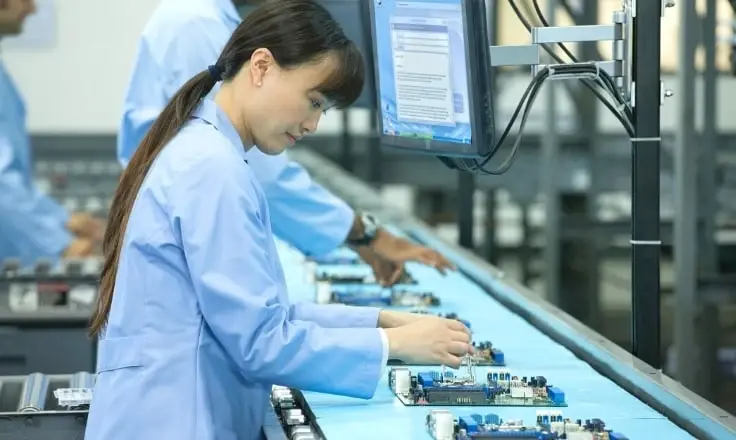
One of the challenges that production plants face on a daily basis is the issue of production efficiency. It is not uncommon for companies to pay much attention to individual downtime or short failures, but if they occur frequently, the entire enterprise may suffer. The appropriate use of the potential of machines on the production line has a direct impact on efficiency. To measure it, an OEE indicator will come in handy.
The beginning of the application of the OEE efficiency index dates back to the 1980s. It was then that Seiichi Nakajima’s book, describing the TPM (Total Productive Maintenance) methodology, gained popularity. This approach assumes maintaining production equipment and machines in maximum efficiency in order to optimize production efficiency. The key indicator taken into account in the TPM methodology is OEE.
OEE – what is it?
OEE is considered to be one of the key indicators for determining the efficiency of an industrial plant. The abbreviation OEE stands for Overall Equipment Effectiveness. Thanks to the ongoing monitoring and analysis of this indicator, it is possible to clearly determine whether a given machine uses its production potential fully.
By collecting figures in real time, it is easier to define stage of production at which downtime or delays may occur, which in turn allows you to react immediately and take appropriate steps to optimize production processes.
Read also: Lean Management in Manufacturing Automation
OEE – what does it depend on?
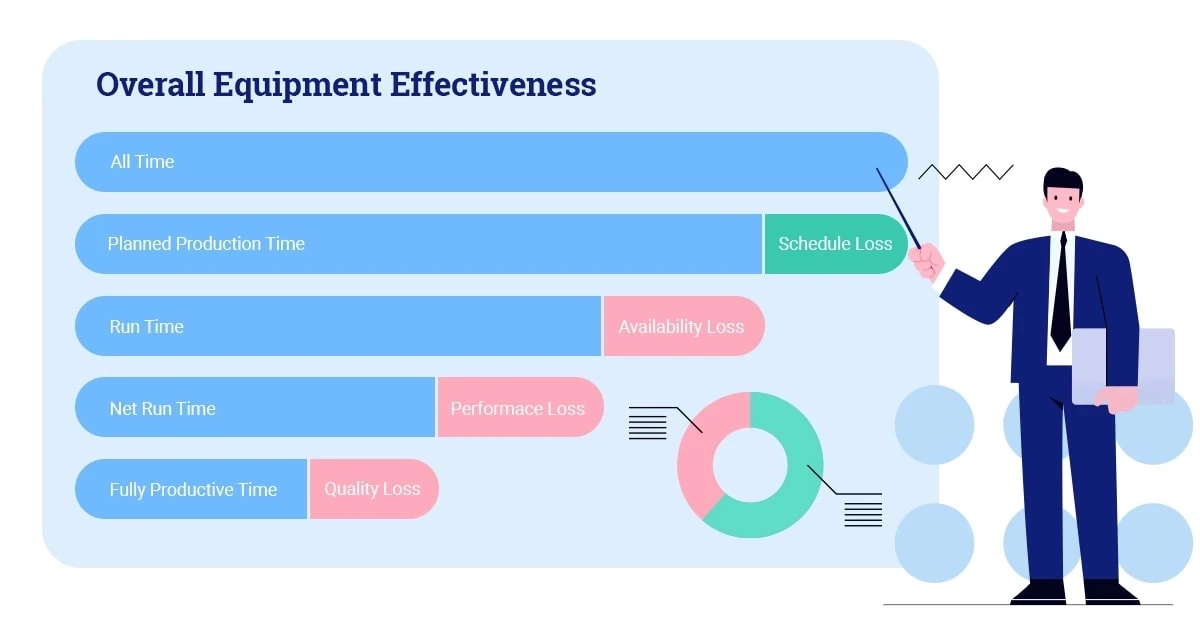
In order to correctly calculate the OEE indicator, the following three parameters should be taken into account:
- Availability, which takes into account all events that reduce machine uptime (for example, breakdowns, downtime and maintenance work)
- Performance, which takes into account any factors slowing down production (e.g. temporary interruptions)
- Quality, which includes copies that do not meet quality standards
But what level of OEE can be considered effective? The international standard (World Class) indicates that OEE in top plants reaches up to 85% (with the above-mentioned parameters at the level of: availability 90%, efficiency 95%, quality 99%). However, such a result for many factories is difficult (though not impossible) to achieve, as in most plants the average OEE value is only 60% or less.
As a rule, it is not possible to define a single standard value of OEE which could be considered as the goal towards which all factories should aim. It is recommended that each plant treats this issue individually, gradually and stably increasing the level of OEE.
Optimize OEE with Comarch MES application
One of the tools enabling ongoing monitoring of the OEE indicator level is the MES-class system (Manufacturing Execution System). Thanks to the implementation of Comarch MES, you will quickly and efficiently identify positions (machines) that require attention or improvement. The software collects data in real time and makes it available to operators, which, if necessary, lays the foundations for improving production efficiency. The system calculates OEE based on ISO 22400 standards.
If you want to learn more about our IoT ecosystem solutions, including MES, visit the www.comarch.com website or email us using the dedicated form.

7 min. read
Space ODA: Integrating SatCom into the Terrestrial 5G/6G Ecosystem
6 min. read
Going Hybrid and Zero-Trust: Uniting the Sector at Critical Communications World 2026
4 min. read
Building the Foundation for AI-Native Networks: How Telecom Operators Can Prepare for 6G?
7 min. read
Going Techco: AI-Native Architecture, Digital Twins, and the End of the Monolith Era at DTW Ignite 2026
8 min. read
The EU AI Act: A Practical Guide to Compliance for Business and Technology Leaders
5 min. read
Insights from Comarch Communications’ First IoT Connectivity Forum: AI, Massive SIM Rollouts, and New GSMA Standards
9 min. read
Comarch User Group 2026: Together Towards The AI-Driven Future of ConnectivitySign up for more insightful content