




Join our newsletter to receive meaningful updates, expert insights, and resources tailored to your interests. We promise to keep our communication valuable - never overwhelming.
Automating OSS in Telcos: How to Overcome the Challenges of Zero-touch Network Design and Optimization
Around: 3 min. read
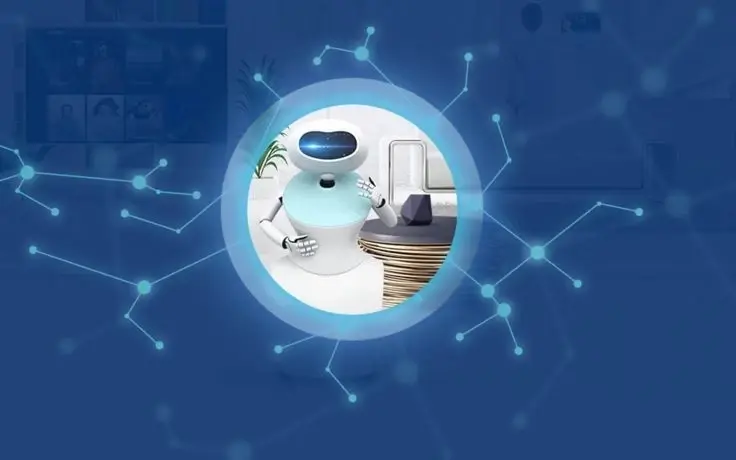
Artificial intelligence (AI), machine learning (ML), OSS automation… we tend to overuse these phrases in every field touched by technology. So it’s worth taking a brief look at what they actually mean.
OSS automation in IT from the perspective of artificial intelligence and machine learning
AI involves optimization and search algorithms, used by computers to find and implement solutions to specific problems. ML refers to processors being able to analyze vast quantities of data and predict how a given situation might impact overall operations. Finally, automation refers to the process of defining certain rules or conditions, contingent on which a system will carry out an action.
Communication service providers (CSPs) have had most success using AI and ML to automate business operations – for billing, invoicing and provisioning. It’s been much more challenging to automate processes on the network side, such as planning, configuration and optimization. This is because CSPs’ networks are traditionally composed of mixed legacy infrastructure that can prove costly and time-consuming to integrate. That’s a vital point, because successful operations support system (OSS) automation relies precisely on integration, without which the costs can easily outstrip the benefits. So, for CSPs, there’s a strong incentive to shift to integrated, even virtual network architectures in order to make the time and financial savings that can give them a competitive edge via automation.
Telcos also need to be clear about what they hope to achieve from OSS automation in IT
Thus, it’s vital to grasp the difference between supervised and unsupervised learning. A CSP may deploy supervised algorithms to solve a given problem using an established model. Unsupervised learning gives computers more autonomy, allowing them to analyze a set of data and work out what the (optimal) outcome may be.
Reshaping infrastructure, understanding goals and deploying the correct tools to achieve them are, however, only part of the journey towards autonomous OSS. Telcos must also consider whether OSS automation is intended for specific use cases, or to implement assisted support systems.
In the first case, a CSP may look at automating functions such Internet service provisioning via self-organizing network (SON) and service/network fulfillment solutions. The assumption of this scenario is that the appropriate implementation will allow such functions to be performed fully autonomously, based on pre-defined algorithms and business rules. In the second scenario, assisted support, there is no end to end automation as such. Instead, computers are directed to capture, process and analyze data from given sources, and to present the results to a human operator who will then feed that information back into the system to trigger specific network actions.
OSS automation: planning the future
If all that sounds complicated… well, that’s because it is. The challenges presented by OSS automation in IT are not, however, insurmountable – as long as telcos remember the steps outlined in this post: integrate infrastructure, understand your goals, deploy the right tools for the job, and plan carefully. Whatever the specifics of your business operations, your OSS solution should remain the platform from which network autonomy springs, supporting – rather than replacing – your key engineers, and being flexible enough to adapt to changes in your company today, tomorrow and in years to come.

7 min. read
Space ODA: Integrating SatCom into the Terrestrial 5G/6G Ecosystem
6 min. read
Going Hybrid and Zero-Trust: Uniting the Sector at Critical Communications World 2026
4 min. read
Building the Foundation for AI-Native Networks: How Telecom Operators Can Prepare for 6G?
7 min. read
Going Techco: AI-Native Architecture, Digital Twins, and the End of the Monolith Era at DTW Ignite 2026
8 min. read
The EU AI Act: A Practical Guide to Compliance for Business and Technology Leaders
5 min. read
Insights from Comarch Communications’ First IoT Connectivity Forum: AI, Massive SIM Rollouts, and New GSMA Standards
9 min. read
Comarch User Group 2026: Together Towards The AI-Driven Future of ConnectivitySign up for more insightful content