





Join our newsletter to receive meaningful updates, expert insights, and resources tailored to your interests. We promise to keep our communication valuable - never overwhelming.
Independent Telecommunications Networks Supporting National Energy Grids
Around: 4 min. read
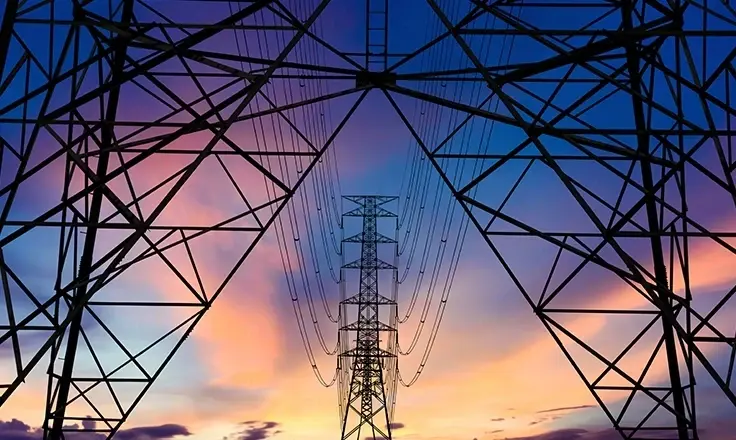
Energy security – from generation to supply and protecting networks and delivery systems – is becoming increasingly important. At the same time, global energy demands are growing and evolving. This is an area in which independent telecommunications networks are already playing a crucial role, and they will continue to do so in 2025 and beyond.
The need for energy security
In recent years, several factors have altered the energy landscape around the world. Even setting aside conflict and natural disasters, we still see a massive shift in the sector with the rise of renewable energy, decentralized power generation, and cybersecurity threats. Because of this, energy providers are seeking to implement new methods of service delivery, network maintenance and security, and service stability. Cooperation with telecommunications networks has helped them deliver this, as they can now use new technologies to monitor, control and optimize systems in a way that traditional grids relying on public telco networks were simply unable to do.
The role of telcos in energy grids around the world
This has led to tangible benefits across the board in the energy sector. Perhaps most importantly, we’ve seen how energy providers can use independent telecommunications networks for enhanced security by ensuring isolated, controlled environments, reducing vulnerability to cyberattacks and disruptions. For example, in 2022, the U.S. Department of Energy allocated $1.2 billion to improve energy infrastructure cybersecurity, highlighting the need for secure communication systems.
The use of independent telecommunications networks in energy provision and management has also made energy supplies more reliable – because they keep going even if disaster strikes and public infrastructure fails. For example, in the UAE, the Dubai Electricity and Water Authority (DEWA) is developing a smart grid with dedicated communication systems, investing $1.5 billion to modernize infrastructure and enhance service continuity during extreme weather events.
Grid management becomes more efficient, too, as private telecom networks enable real-time monitoring and control for grid optimization, particularly for grids with renewable energy sources. In Saudi Arabia, a private network connects more than two million smart meters, improving automation and reducing operational costs by 15%. This is expected to boost reliability by 10% in the next five years.
Finally, we are seeing energy companies use independent telecommunications networks to support integration and decentralized energy systems. In this respect, one can look to the example of Germany’s Energiewende, connects over 1.5 million renewable energy producers to facilitate seamless and secure integration.
Investment today to keep the lights on tomorrow
In conclusion, we can say that countries worldwide recognize the importance of independent telecom networks. In fact, Germany is investing over €100 billion in its energy transition by 2030, with a significant portion for grid communication. China’s State Grid Corporation processes 100 terabytes of data daily to optimize grid stability, while in the U.S., utilities companies such as PG&E are deploying private 5G networks for enhanced grid automation and cybersecurity. This trend is only likely to continue in 2025 and beyond as energy demand increases and both sources and delivery continue to diversify.
Sources:
1. Engineering a Cyber-Informed Energy Infrastructure; November 22, 2024
2. Dewa Smart Grid Report 2024; Dubai Electricity & Water Authority, Government of Dubai, 2024
3. UAE's Masdar to Develop $1,5 Billion Solar Park for DEWA; Gautamee Hazarika; September 7, 2023
4. Opportunities For Cybersecurity Investment In The Bipartisan Infrastructure Investment And Jobs Act; National Governors Association; August 24, 2022
5. Dubai to invest $1.9bn on 2035 Smart Grid Strategy; Transformers Magazine; May 2, 2022
6. DEWA launches Smart Grid Report 2022; Zawya; June 20, 2022

7 min. read
Space ODA: Integrating SatCom into the Terrestrial 5G/6G Ecosystem
6 min. read
Going Hybrid and Zero-Trust: Uniting the Sector at Critical Communications World 2026
4 min. read
Building the Foundation for AI-Native Networks: How Telecom Operators Can Prepare for 6G?
7 min. read
Going Techco: AI-Native Architecture, Digital Twins, and the End of the Monolith Era at DTW Ignite 2026
8 min. read
The EU AI Act: A Practical Guide to Compliance for Business and Technology Leaders
5 min. read
Insights from Comarch Communications’ First IoT Connectivity Forum: AI, Massive SIM Rollouts, and New GSMA Standards
9 min. read
Comarch User Group 2026: Together Towards The AI-Driven Future of ConnectivitySign up for more insightful content