


Join our newsletter to receive meaningful updates, expert insights, and resources tailored to your interests. We promise to keep our communication valuable - never overwhelming.
Comarch Communications at MWC Barcelona 2026: The Shift Toward Agentic AI, Satellite Convergence, and Cross-Industry Connectivity
Around: 6 min. read
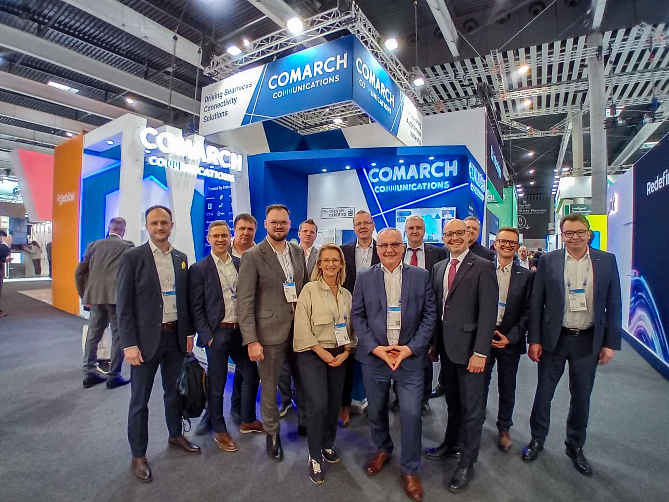
MWC Barcelona 2026 once again opened its doors to industry leaders and technology enthusiasts, showcasing exactly how the global connectivity landscape is transforming from building basic infrastructure to finding practical, profitable applications for 5G, artificial intelligence, and satellite networks.
The 20th anniversary edition was also special for us, as it marked our very first time exhibiting under the new name, Comarch Communications. Having spent incredibly busy days at Fira Gran Via and engaged in discussions shaping the industry’s future, we present our most important takeaways.
Closing the loop for agentic AI in network infrastructure
A dominant theme across the exhibition halls was the practical implementation of artificial intelligence. The connectivity sector has grown tired of empty promises and basic tools generating alarm fatigue. The consensus at MWC 2026 is that operators are no longer looking for well-spoken chatbots; they are demanding a solid return on investment and practical zero-touch operations.
Industry experts point to agentic AI as the solution. The GSMA launched the Open Telco AI initiative to accelerate the development of telco-grade models, noting that currently only 16% of generative artificial intelligence deployments in telecommunications have been applied to network operations.
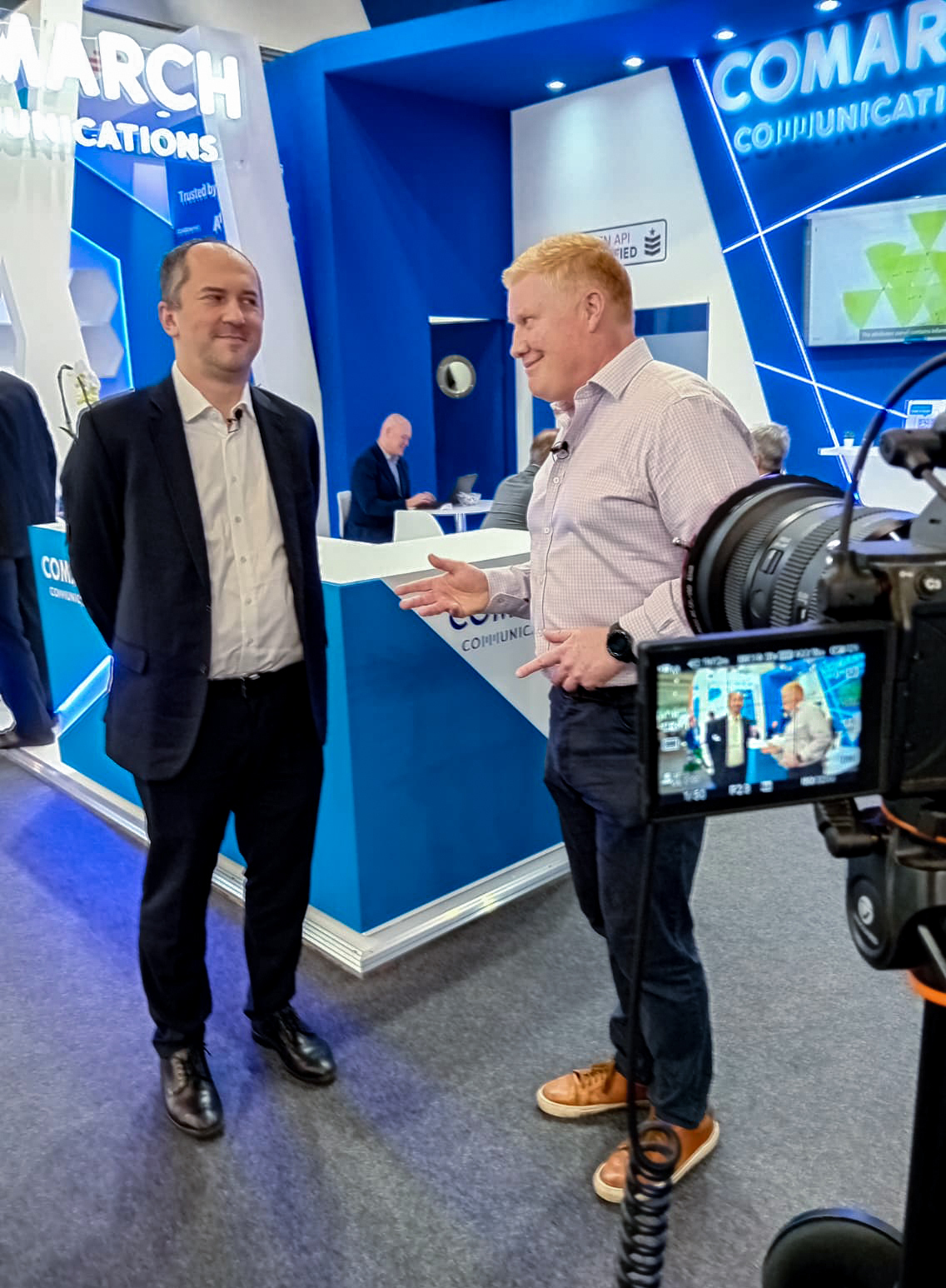
Tymoteusz Wrona, Chief Strategy & Operations Officer at Comarch Communications, discussed this shift and how it influences our approach in an interview with Telecom Review:
“In 2026 we see that telecoms are very tired about the promises of AI and what it can bring. We see also on our side that Telcos would like to transform to TechCos, which means that they have to eliminate labor work. We are also moving from generative and analytical AI to practical solutions of AI, meaning agentic AI, and we are introducing those approaches into our solutions. We start with machine learning, of course, where there is the need for real predictability. However, we are introducing a lot of AI into our products from a process perspective – how we are using it in our revenue management, customer management systems, and also network management systems,” he said.
This transition to closed-loop intelligence means AI agents can independently manage the network slice lifecycle and perform self-healing actions in real time. This operational agility significantly reduces operating expenses and frees up engineering teams to focus on developing new services.
Monetizing network APIs and overcoming BSS bottlenecks
With 5G Standalone (SA) networks now a reality, the conversation has naturally shifted toward monetizing 5G Advanced networks. While 5G SA core networks are fully operational, the primary bottleneck preventing operators from capitalizing on complex B2B2X models lies in monolithic Business Support Systems (BSS).
Global initiatives such as CAMARA and the GSMA Open Gateway are driving the standardized adoption of network APIs globally. However, turning this into revenue requires highly advanced, modular billing engines capable of real-time micro-transactions. Speaking to Mobile Europe, Marcin Kaleta, CEO of Comarch Communications, emphasized that modern connectivity requires a departure from traditional pricing based purely on data volume, which enabled us to go beyond the bounds of traditional telco and open to new industries as Comarch Communications.
"More industries are acting now like telcos. [...] Their systems are so complex that they aren't able to use old solutions like ERP to calculate proper discounts, to do proper bills. However, telecommunication software is so complex that it is much easier to simplify telecom software, for example billing, to logistics companies than to build additional complexity in such companies. This is one thing. The second thing is that now legacy models are changing for the operators. They don't have any more revenue from, for example, mobile services, so they need to search for additional revenue streams," explained Marcin in his interview.
Telecom-grade reliability in critical infrastructure
The strategic direction of the connectivity industry is expanding far beyond traditional telecommunications. Sectors such as energy, logistics, and public safety offer services increasingly resembling the complexity that telecom operators face for decades, requiring the same advanced network slicing and complex pricing models.
These mission-critical environments demand zero downtime and the highest level of security. Service providers are now exporting decades of highly regulated telecom experience to these new markets. Prominent examples discussed by Comarch Communications included building a dedicated critical communications network in the 450 MHz frequency band for 450connect in Germany, and establishing a highly secure greenfield network for the industrial and energy sectors to support Saudi Arabia’s Vision 2030.
The mainstreaming of non-terrestrial networks
Another massive focal point at the congress was the seamless integration of Non-Terrestrial Networks with traditional ground infrastructure. Low Earth Orbit (LEO) satellite constellations are no longer viewed merely as emergency backups but are becoming an integral, core component of global 5G and future 6G networks. Underscoring this shift, the GSMA Foundry and the European Space Agency (ESA) announced access to new funding worth up to €100 million specifically targeting AI, NTN, Direct-to-Device (D2D), and 6G development.
According to expert analysis shared at the event, this convergence is irreversibly transforming satellite communication from a closed wholesale niche into a mass retail market. However, static inventory systems are prone to infrastructural blindness caused by fast-moving satellite topologies. To solve this, experts advocate for live inventory systems that dynamically reconcile operational data with space telemetry in real time (saving 15 to 20% of highly expensive satellite bandwidth) and cloud-native billing platforms capable of seamless charging for users switching effortlessly between space and terrestrial networks.
Comarch Communications at the heart of innovation
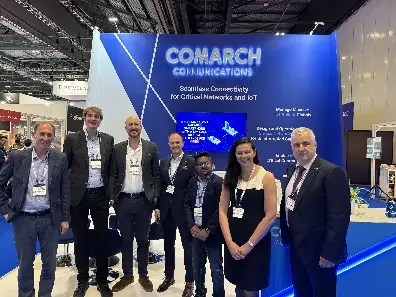
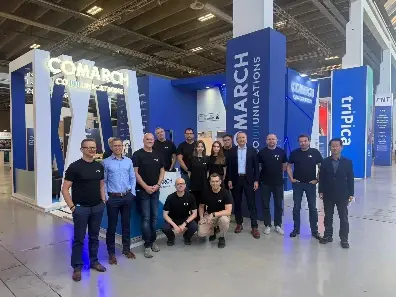
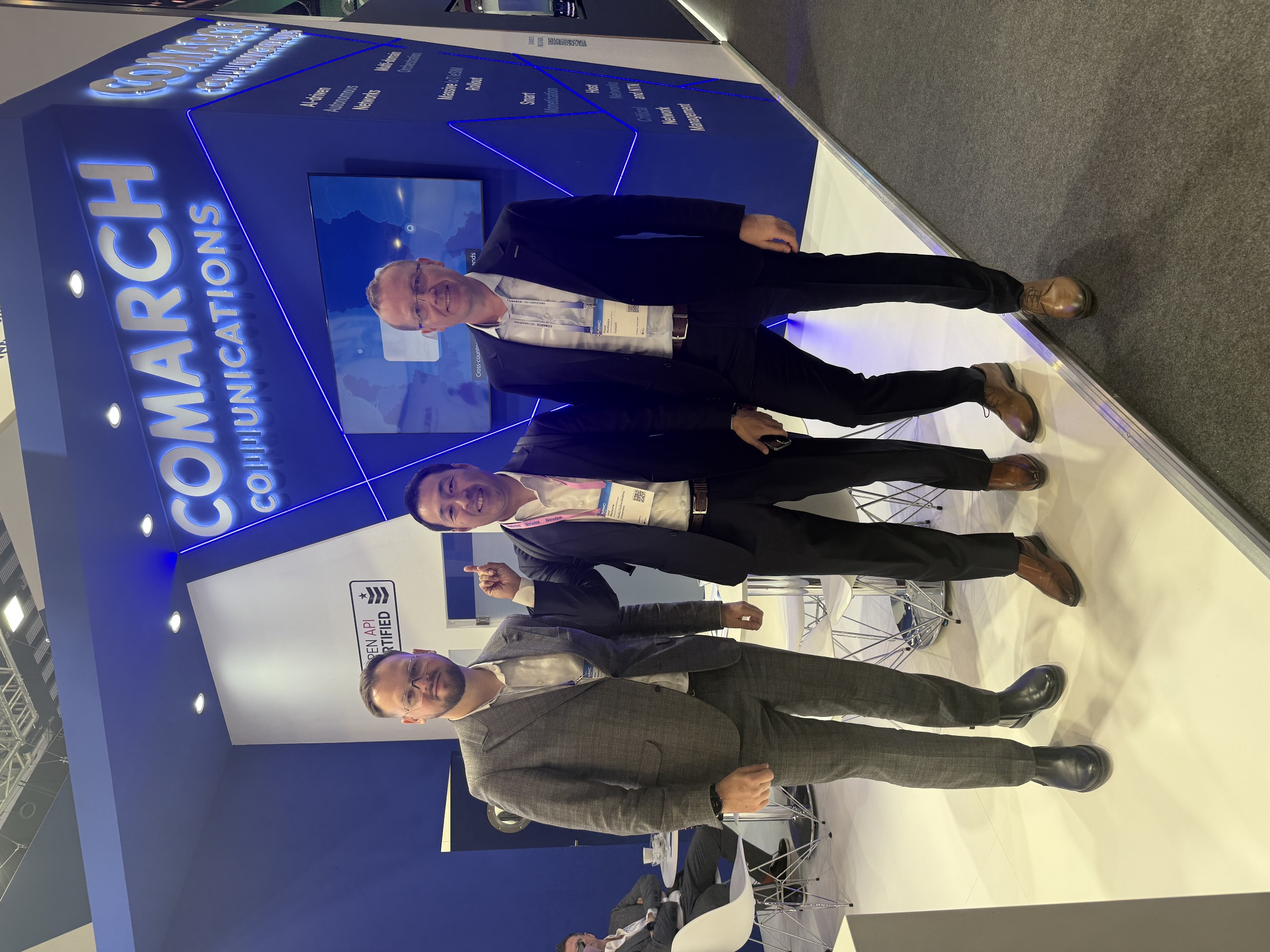
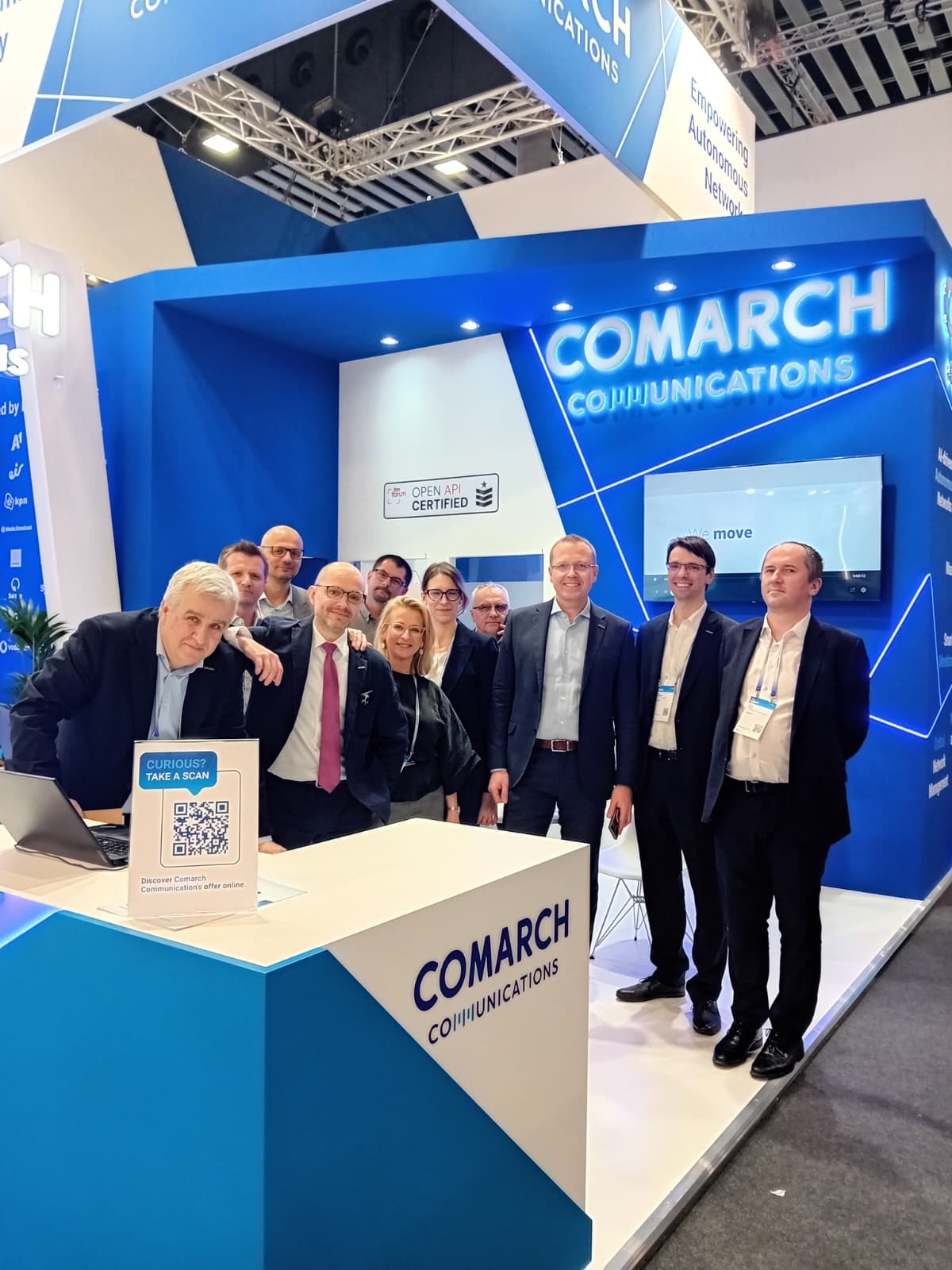
Our presence at MWC 2026 underscored these broader industry trends. Comarch Communications representatives held approximately 100 dedicated meetings during the event, half of which were conducted directly with C-level executives.
At our booth, we actively promoted technologies that align directly with the industry's new direction, including:
- AI-driven autonomous networks
- Multi-domain orchestration
- Massive IoT and eSIM rollout
- Smart monetization
- Critical network management
Through media engagements with Pipeline Magazine, Telecom Review, and Mobile Europe, our leadership detailed how the traditional model of a single entity "owning everything" is changing. Instead, the industry is moving toward layered business models (NetCo and ServCo structures) heavily driven by cross-industry ecosystems and automated service monetization.
Looking forward to the intelligent ecosystems of tomorrow
MWC Barcelona 2026 proved that the communications industry has moved entirely past the platform era and is now deeply embedded in a highly intelligent, connected ecosystem. The boundaries between traditional telecommunications and other critical industries are rapidly dissolving as sectors such as energy, logistics, and public safety demand the exact same rigorous reliability and complex pricing models.
By embracing autonomous AI, modular monetization architectures, and the rapid convergence of satellite technologies, the global tech community is proudly providing the crucial foundation for the complex digital ecosystems of tomorrow.
The congress served as a powerful reminder that while technology continues to evolve at an unprecedented pace, the ultimate goal remains the same: connecting people, bridging digital divides, and creating a more secure and prosperous world for everyone.

7 min. read
Space ODA: Integrating SatCom into the Terrestrial 5G/6G Ecosystem
6 min. read
Going Hybrid and Zero-Trust: Uniting the Sector at Critical Communications World 2026
4 min. read
Building the Foundation for AI-Native Networks: How Telecom Operators Can Prepare for 6G?
7 min. read
Going Techco: AI-Native Architecture, Digital Twins, and the End of the Monolith Era at DTW Ignite 2026
8 min. read
The EU AI Act: A Practical Guide to Compliance for Business and Technology Leaders
5 min. read
Insights from Comarch Communications’ First IoT Connectivity Forum: AI, Massive SIM Rollouts, and New GSMA Standards
9 min. read
Comarch User Group 2026: Together Towards The AI-Driven Future of ConnectivitySign up for more insightful content