

Join our newsletter to receive meaningful updates, expert insights, and resources tailored to your interests. We promise to keep our communication valuable - never overwhelming.
A Facilitator for Digitization: 25 Years of Comarch
Around: 4 min. read
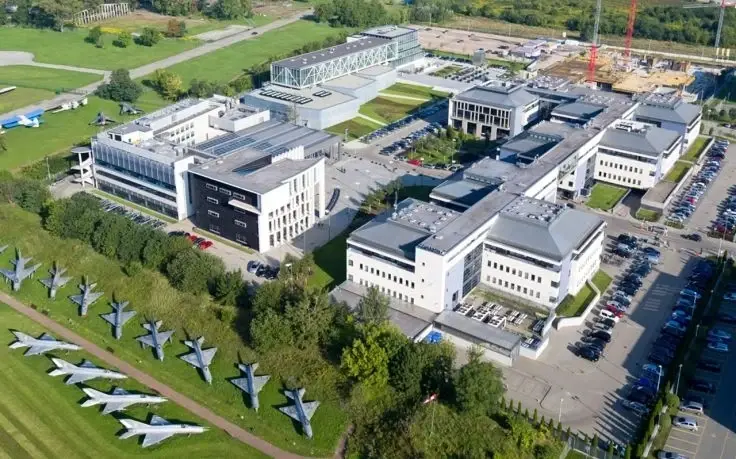
A lot has changed in telecommunications in the past 25 years. A quarter of a century ago, the 2G standard was the “new” cutting edge of technology and IBM was just launching a combined mobile device that not only handled phone calls but also operated as a digital organizer and came with fax and pager (remember those?) functionalities. Now, 5G is the standard to meet, virtualization and automation are reshaping networks, and the Internet of Things (IoT) is booming. For all that time, Polish tech firm Comarch has been right on the edge of innovation and new developments – and looks set to remain there for the foreseeable future.
25 years of Comarch – 25 years of innovation
The Comarch story began in a year that was pivotal for the history of Poland and the whole of Europe. In 1989, as the country led the way in tearing down the Iron Curtain that had for so long separated East and West, an assistant professor in Kraków was drawing on his network of international contacts to attract investment and expertise to research and development at the city’s AGH University of Science and Technology. Janusz Filipiak had a vision that was, two years later, to become Computer and Communications Consultants Limited, the forerunner of today’s Comarch. Professor Filipiak brought on board some of his best students, and it wasn’t long before the newly-minted Comarch had won a major contract – with national operator Telekomunikacja Polska. This was not just something of a coup for a fledgling firm in the south of Poland, but a move to lay strong foundations for the company’s future; Telekomunikacja Polska, later merged with PTK Centertel before joining the Orange Group, maintains an excellent relationship with Comarch to this day.
Convergence and integration are commonplace today, but at the time Comarch was offering products that really were revolutionary in these terms. The company provided Telekomunikacja Polska with forerunners of modern billing systems (VAST, Bilpak and Tytan) and of distributed database systems (SEZtel).
The turn of the century saw the popular emergence of voice over internet protocol (VoIP), a game-changer in the telecommunications industry and an innovative opportunity that Comarch was quick to seize. The award-winning reputation of the Tytan billing system won the company a contract with South American VoIP operator Terra Telecommunications. As with the TP deal that later established Comarch with Orange, the Terra contract opened doors – this time to expansion across the whole South American region.
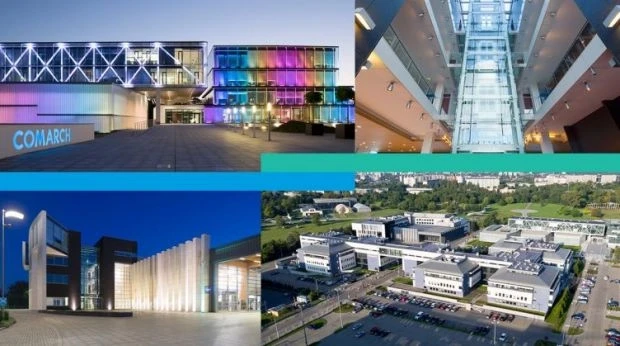
Comarch was by now punching above its weight, and perhaps surprising the telecommunications world with its demonstration of the vigor and capabilities of the Polish technology sector. The company cemented its position when it won a contract with Germany’s O2 (Telefónica), to provide a number of solutions which are today offered as the modular Comarch OSS and are now deployed by Deutsche Telekom, E-Plus GmbH and others.
In order to stay ahead of the market, Comarch had to continue innovating, and did so by developing comprehensive “next generation” OSS/BSS solutions based on automation to a degree that gives operators the freedom to focus on increasingly important client-focused operations and service modeling. That strong focus on innovation continues to be the cornerstone of Comarch’s development in today’s telecommunications landscape, where over the top (OTT) providers such as Netflix and Facebook are revolutionizing the way the industry operates. These “born in the virtual world” OTTs truly threw out the rule book, switching focus from physical networks to virtualized, automated systems offering applications in the cloud and capable of self-scaling and even artificial intelligence-based learning. Traditional operators know now that they must follow this trend or perish, and turn to Comarch to provide them with NFV/SDN and self-organizing network solutions that facilitate the implementation of omnichannel strategies, IoT management, the rapid introduction of services to the market, lower cost network operations, and data collection and analysis. In short, Comarch is for many telecommunications companies today a facilitator for digitization.

7 min. read
Space ODA: Integrating SatCom into the Terrestrial 5G/6G Ecosystem
6 min. read
Going Hybrid and Zero-Trust: Uniting the Sector at Critical Communications World 2026
4 min. read
Building the Foundation for AI-Native Networks: How Telecom Operators Can Prepare for 6G?
7 min. read
Going Techco: AI-Native Architecture, Digital Twins, and the End of the Monolith Era at DTW Ignite 2026
8 min. read
The EU AI Act: A Practical Guide to Compliance for Business and Technology Leaders
5 min. read
Insights from Comarch Communications’ First IoT Connectivity Forum: AI, Massive SIM Rollouts, and New GSMA Standards
9 min. read
Comarch User Group 2026: Together Towards The AI-Driven Future of ConnectivitySign up for more insightful content